






Continuing Care Assistants are calling on the Saskatchewan Health Authority and provincial government to address staffing shortages and wages as contract negotiations continue.
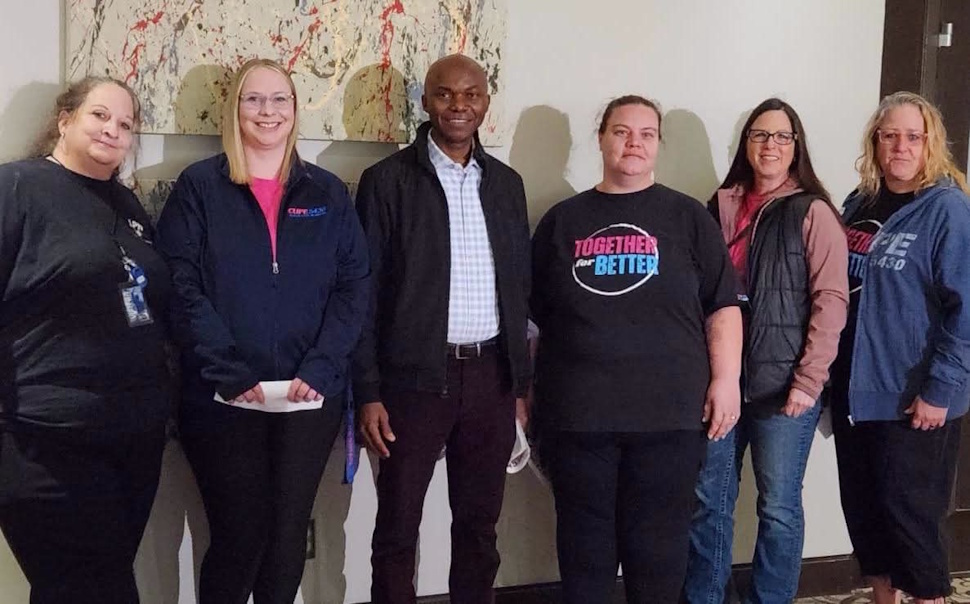
Members held a demonstration over the weekend, with one of the key goals being to raise awareness about a recent strike mandate and the concerns many workers say they are facing on the job.
Laura Guilbault, a Continuing Care Assistant and union member, said workers wanted to send a clear message during bargaining.
"We were hoping that we could bring awareness to our 99 per cent strike mandate vote, especially during bargaining," said Guilbault. "We want them to know and understand that we are strong, we're united, and we're ready to fight for the deal the members deserve."
Related Stories:
- Government defends changes following CUPE town hall
- CUPE townhall highlights concerns over child-care cuts
- Province announces shift from growth to sustainability for $10 a day child care
- Line 19 Daycare takes top prize in provincial contest, secures $25K
- Funding announced for child care spaces at Sask Polytech
- ▶️ Stream this news story: 800 CHAB, Country 100, Mix 103
Concerns over staffing levels
The demonstration follows the release of a survey that found 76 per cent of Continuing Care Assistant respondents said they do not believe staffing levels are safe.
Guilbault said the issue extends across multiple areas of the health-care system.
"It doesn't matter if you're in a hospital, care home or working in home care," she said. "There aren't enough CCAs to do the job."
Guilbault says patients and clients are increasingly presenting with more complex needs, while staffing levels struggle to keep pace.
She added that staffing shortages are contributing to burnout and prompting some workers to leave the profession.
Wages a key bargaining issue
Guilbault said wages remain one of the largest issues at the bargaining table.
"We haven't had a wage increase in four-and-a-half years," she said.
She noted that rising costs for groceries, fuel and housing have left some workers struggling to keep up financially.
"Some staff are picking and choosing which bills get paid or how much they can spend for groceries," Guilbault said.
She believes improving wages would help Saskatchewan retain health-care workers who may otherwise seek opportunities elsewhere.
"We do have some of the lowest wages in Canada for CCAs," she said.
Government points to investments and ongoing bargaining
In a statement to Discover Moose Jaw, the Ministry of Health said the provincial government remains committed to providing quality care for residents across Saskatchewan, including those receiving long-term care and home care services.
The ministry noted that the province previously committed to hiring 300 Continuing Care Assistants and says that target has been met. The government added that the 2026-27 provincial budget includes $19.2 million in annualized funding to support those positions.
The ministry declined to comment directly on bargaining issues, citing ongoing negotiations between the Saskatchewan Association of Health Organizations and union partners.
The ministry added that it remains committed to seeing a new agreement reached through good-faith bargaining.
Moving forward
Despite the government's hiring commitments, Guilbault said many frontline workers continue to feel staffing pressures every day.
"If there's not enough health-care staff, there are closures, there are delays, and the waits just get longer and longer and longer," she said.
Guilbault believes improving wages and working conditions is key to retaining workers and strengthening Saskatchewan's health-care system.
"What people need to understand is the CCAs are fighting not just for us," she said. "We are fighting for everybody. It's about the future of our health-care system."
She added that workers want recognition for the role they play in patient care.
"We want to be taken seriously. We want them to know that we are valuable and we are part of this health-care system."















 Fri, Oct 16, 7:00 PM


 Full-time, Permanent, Communications/Media, Sales
 Featured